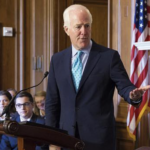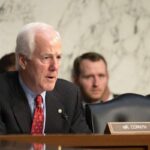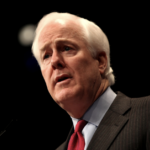

U.S. Senator John Cornyn (R) is celebrating the signing of two major bipartisan measures he authored. the Halting the Epidemic of Addiction and Loss (HEAL) Act and the Improving Access to Addiction Medicine Providers Act are part of the SUPPORT for Patients and Communities Reauthorization Act, which was signed into law by President Trump.
In a statement, Cornyn said the legislation represents a critical step in confronting the opioid epidemic.
"The opioid crisis continues to ravage communities across our nation, but there are effective and evidence-based solutions we can implement to curb its virulence," he said in a statement. "These bills will help save lives by expanding access to overdose reversal agents and providers in the field of addiction medicine, and I am grateful to President Trump for signing them into law."
The HEAL Act, cosponsored by Sen. Maggie Hassan (D-NH), updates U.S. Department of Health and Human Services guidance and grant language to ensure states and organizations are not limited to naloxone alone.
Current rules have inadvertently restricted access by tying regulations and funding strictly to naloxone, depire the emergence of other FDA-approved or next-generation overdose reversal medications.
The bill requires HHS to make its guidance "molecule agnostic," allowing states, tribes, local governments, and nonprofits to use whichever reversal agent best fits local needs.
Cornyn's second measure, cosponsored by Sen. Ben Ray Lujan (D-NM), adds additional medicine as an eligible field for SAMHSA fellowships, aiming to expand the workforce equipped to treat substance use disorders.
The legislation follows new federal data showing overdose deaths declined nearly 30% in 2024, though more than 80,000 people still died, with 60% involving synthetic opioids like fentanyl. Cornyn has held multiple events across Texas to highlight fentanyl dangers and continues to lead the Senate's International Narcotics Control Caucus.
Together, Cornyn's measures aim to broaden access to lifesaving tools while strengthening the nation's addiction treatment workforce.