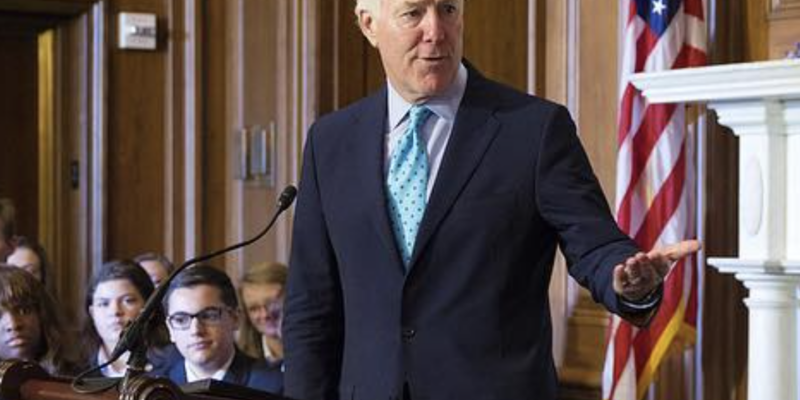

U.S. Senator John Cornyn (R) is voicing strong support for President Donald Trump's handling of the Iran conflict following the announcement of a two-week ceasefire and agreement to reopen the critical Strait of Hormuz.
In a recent op-ed published in the Washington Examiner, Cornyn praised what he described as Trump's "resolve" through "Operation Epic Fury," arguing the administration's actions have significantly weakened Iran's military capabilities while advancing U.S. national security interests.
"Iran has been the world's No. 1 state sponsor of terror for decades," wrote Cornyn, asserting that reducing the regime's power is key to achieving long-term global stability.
Iran has been the world’s number one state sponsor of terror for decades. If we want to have fewer wars & a more peaceful world, a defanged Iranian regime is in everyone’s interest. Building on Operation Midnight Hammer last summer, @realDonaldTrump is serving America & the world…
— Senator John Cornyn (@JohnCornyn) April 8, 2026
Cornyn credited Trump's approach for securing the temporary ceasefire, which allows oil shipments to resume through the Strait of Hormuz, a vital pathway for global energy markets.
The senator also pushed back on criticism of Trump's rhetoric during the conflict, describing it as strategic.
"By issuing a dramatic threat...Trump was displaying masterful deal-making skills," wrote Cornyn, framing the president's language as a calculated effort to apply pressure on Iran.
According to Cornyn, Operation Epic Fury has dealt a major blow to Iran's military infrastructure, citing strikes on missile systems, weapons facilities, and naval assets. He argued the operation was necessary to counter Iran's support for terrorist organizations and its role in destabilizing the region.
The ceasefire comes after days of escalating tensions, raising concerns about a broader regional war before negotiations led to a temporary pause in hostilities.
Cornyn's praise highlights continued Republican support for Trump's "peace through strength" strategy, even as debate continues over the long-term implications of U.S. involvement in the Middle East.