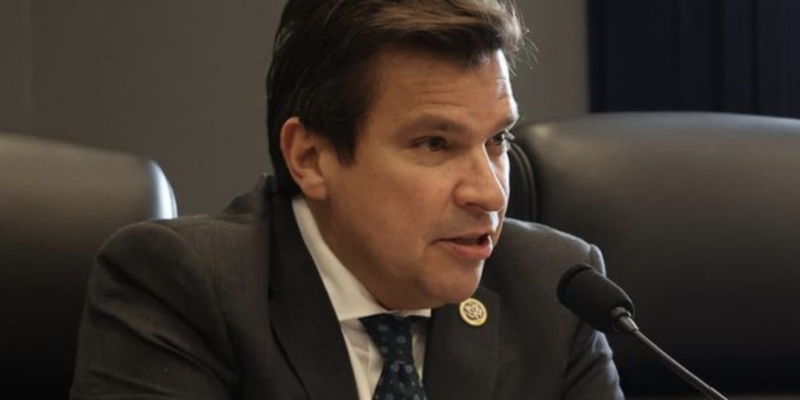

U.S. Representative Vicente Gonzalez (D) is leading a push to protect federal energy assistance for low-income families, urging House budget leaders to reject a proposal that would eliminate the Low Income Home Energy Assistance Program (LIHEAP).
Gonzalez joined 73 members of Congress in a letter to House Appropriations Committee leadership, warning that ending the program would come at a time when many families are already struggling with rising household costs and growing utlity debt.
"Nearly six million low-income households rely on this program to heat and cool their homes," the lawmakers wrote. "At a time when energy and gas prices are skyrocketing... to propose this elimination is unfathomable."
LIHEAP helps low-income households cover heating and cooling costs and provides relief during periods of extreme weather and volatile energy prices. In Texas, the program operates through the state's Comprehensive Energy Assistance Program.
According to Gonzalez's office, more than 125,000 Texans qualify for assistance through program, while over 66,500 Texas households currently benefit from LIHEAP support. Average savings can reach $3,178 for cooling assistance and $1,102 for heating assistance.
Lawmakers also argued that millions of Americans are being forced to make difficult financial tradeoffs just to keep utilities on.
"More than 80 million Americans are struggling to pay their energy bills, and one in five households report forgoing basic necessities like food and medicine to pay an energy bill," the letter stated.
The group further linked current affordability pressures to rising fuel, food, and utility costs, warning that eliminating LIHEAP would deepen the burden on working families seniors, and vulnerable households.
Across the country, LIHEAP serves nearly six million households each year, making it one of the largest federal safety-net programs focused on home energy affordability.
Gonzalez's effort highlights growing conern over cost-of-living pressures in Texas and nationwide, as lawmakers debate whether to preserve a program many families rely on to keep the lights on and homes safe during extreme weather.