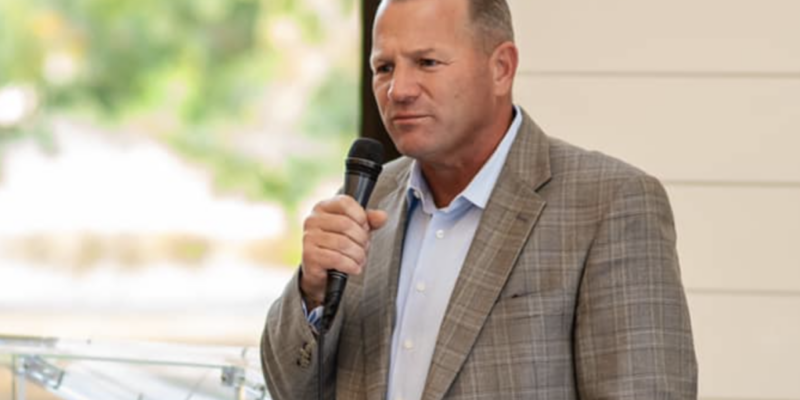

WASHINGTON-- In an exclusive interview with Texas Politics, U.S. Representative Troy Nehls (R) strongly endorsed legislative efforts that would require social media companies to give parents greater oversight into what their children access and download online.
Rep. Nehls said he supports the Kids' Online Safety Act and emphasized that modern devices pose serious risks to your mental health and safety.
"I think your parents should have a right to know that," said Rep. Nehls. "These phones can be very dangerous."
He described smartphones as an increasingly dominant force in young people's lives, replacing in-person communication and contributing to what he sees as a decline in social interaction. "Everything's done on the phone," he emphasized.
Rep. Nehls noted that simple conversations have been replaced with texting, adding, "There's no conversation anymore, it's all done on this phone."
According to the Texas Republican, the societal impacts go beyond communication habits. He argued that smartphones and social media are driving "mental health issues for the American people," especially among youth, citing bullying and constant exposure to online content as major contributors.
He referred to international approaches to youth online access, pointing to China's restrictive model as an example of stronger content controls.
"You get everything on this thing," said Rep. Nehls. "You've got to do kind of what China does. They restrict it, and control the content of it too."
The Texas lawmaker pointed to foreign platforms such as TikTok contributing to the problem, stating, "They sent that over here and just polluted the minds of our young people, So I was all about the banning of TikTok, or at least...let somebody in America control."
He concluded by reiterating that smartphones have become inseparable from daily life for many young Americans.
"It's like a third arm," he said. "Everyone's looking down at their phone."
Rep. Nehls argues that stronger parental oversight and tighter platform controls are essential to protect young Americans from the growing mental health and social harms he believes are driven by smartphones and social media.