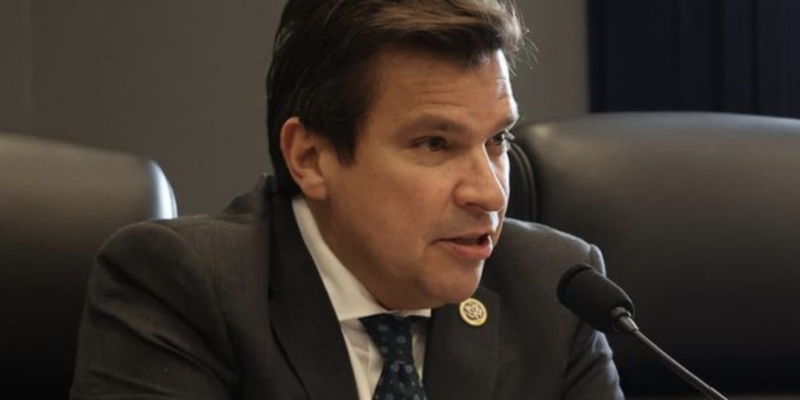

The future of one of South Texas' most important military employers is getting a bipartisan push from Congress.
U.S. Representatives Vicente Gonzalez (D) and Michael Cloud (R), along with Senators John Cornyn (R) and John Fetterman (D), have introduced the Depot Data Transparency Act, a bill aimed at giving Congress a clearer picture of how military depot maintenance funds are distributed, including the Corpus Christi Army Depot (CCAD).
"Over the past decade, Corpus Christi Army Depot's highly-trained civilian workforce has dropped by thousands," said Gonzalez, arguing that the problem requires a federal solution.
The legislation would update reporting requirements surrounding the military's so-called "50-50 rule," which requires each military service to dedicate at least half of its depot-level maintenance funding to work performed by federal employees at Organic Industrial Base facilities.
The lawmakers say the current reporting system does not provide enough visibility into how those dollars are distributed among individual depots. Their bill would change that by requiring more detailed, depot-level reporting, giving Congress a better look at where maintenance work and funding are going.
For CCAD, that transparency could have major implications. Gonzalez says protecting the depot means protecting South Texas' military competitiveness and the thousands of workers who depend on it.
Rep. Cloud similarly emphasized that facilities such as CCAD need to receive a fair evaluation when maintenance work is distributed.
"This bill brings needed transparency to how depot maintenance work is distributed, ensuring facilities like Corpus Christi Army Depot get a fair individual look," said Cloud. "Transparency like this strengthens our organic industrial bases and protects our national security."
The bill has already gained bipartisan momentum, with Gonzalez's House language included in the House-passed version of the FY2027 National Defense Authorization Act.
At a time when military readiness increasingly depends on maintaining a highly skilled domestic workforce, the lawmakers behind the bill are betting that better information can lead to better decisions and help keep critical maintenance capabilities at home.