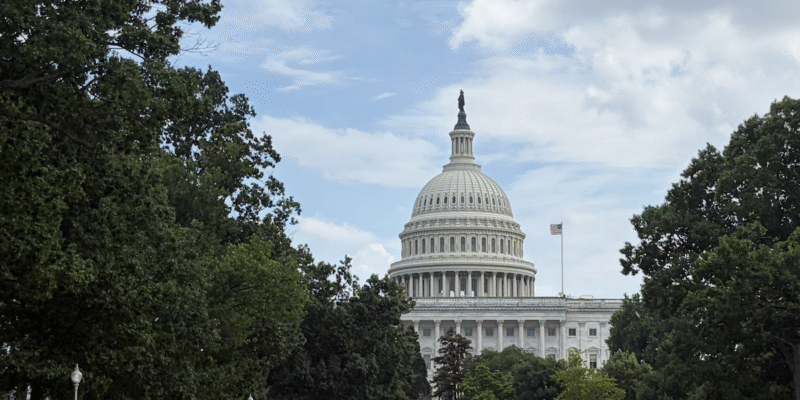

In the final week before Senators head home until after the midterm elections, the chamber was hoping to pass one bill to curb data center anxiety among voters — but Democrats’ objections that the bill was too weak led the measure to fail.
In a 57-43 vote, the Senate failed to clear the House-passed Ratepayer Protection Act that would require states to consider standards making large electricity users, including data centers, responsible for the costs of generation, transmission and distribution upgrades needed to serve them.
The bill, championed by Senator Jon Husted (R-OH), who faces a shaky reelection campaign in his state, failed to go far enough to protect ratepayers, Democrats argued. However, Texas Sen. John Cornyn (R-TX) said it was more of a partisan setup.
“Democrats once again put their party first and voted against it, despite their recent complaints about affordability,” he said on X. “The American people deserve better.”
Sen. Cornyn added the bill would have helped “hardworking Americans and small businesses by empowering companies building data centers to pay for power and grid infrastructure upgrades.”
Rep. Kathy Castor (D-FL), who authored the original piece of legislation, said she was disappointed to see it fail to pass. As concerns over AI surge, she said Congress needs to act to ensure the costs of the technology’s growth do not fall on Americans.
“Congress has a responsibility to act and, at the very least, ensure that Americans are not on the hook for Big Tech’s enormous data center energy demands,” Rep. Castor said.
Now, Sens. John Curtis (R-UT) and Lisa Blunt Rochester (D-DE) are introducing an alternative bill that would require data center companies provide more information to the communities it builds on. It would also require federal reporting on the environmental impacts of large data centers.
But with the House and Senate both gone until November, voters are left with the same uncertainty on the data center issue.
“My neighbors are grappling with sky-high electric bills and economic strain,” Rep. Castor said, describing the affordability crisis most voters are experiencing. “And this bill would be an important first step to protect them from predatory corporations and corrupt actors.”