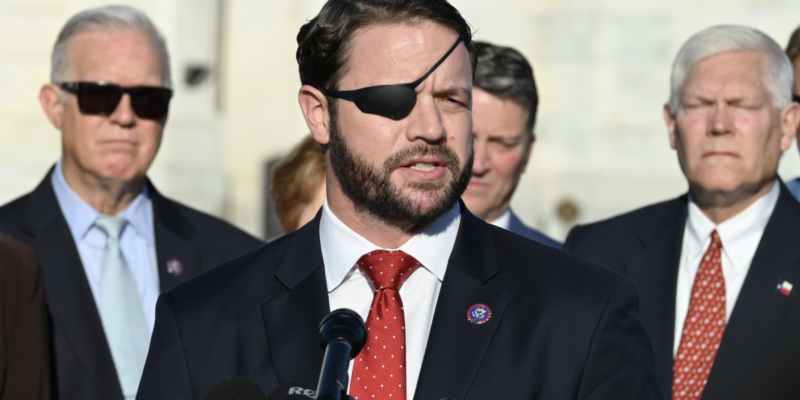

Texas Republican Representatives Dan Crenshaw and Randy Weber pointed to violent unrest in France as a warning about America's political direction, linking the demonstrations to concerns about socialism, cultural politics, and the future of Western civilization.
The comments followed nationwide protests in France over rising living costs and poor conditions in schools that escalated into clashes with police, arson, and looting. French authorities reported approximately 2,400 arrests over the weekend, while thousands of businesses were reportedly damaged or looted. Hundreds of thousands of people also participated in peaceful demonstrations.
Rep. Crenshaw referenced a recent speech by Sen. Marco Rubio, describing it as "historical," and shared a warning about societies lowering standards in the name of avoiding failure.
"We hold the most exceptional things among us, hostage to the average, the ordinary, the mediocre," Crenshaw quoted.
He then connected violence in France to a broader argument about preserving Western civilization, writing that the unrest showed how civilization could be destroyed by people who had not built it.
Rep. Weber made a similar comparison, arguing that the unrest should serve as a warning to the United States.
"The fires in Paris should be a warning to Western Civilization," Weber wrote.
He added that the United States could face similar turmoil if it does not reject what he called "the socialist ship" and "woke, America-hating culture."
The lawmakers' comments reflect a broader conservative argument that progressive political movements and cultural changes pose risks to American institutions. Their posts did not establish that socialism or "woke" politics caused the French unrest.
The protests in France included grievances over the cost of living and school conditions, while French President Emmanuel Macron blamed the violence on radical far-left groups and criminals; the government has pledged a firm response and called for accountability for looting and attacks on public buildings.
The unrest has become a point of political debate beyond France, with U.S. conservatives using the events to argue for changes in American political and cultural priorities.