
On Feb. 1, Iran’s supreme leader, Ayatollah Ali Khamenei, advised that any strike by the United States would ignite a “regional war” in the Middle East, further increasing tensions as President Donald Trump has threatened to militarily attack the Islamic nation in response to its actions amid recent nationwide protests, according to The Associated Press.
“We are not the ones who start a war, and we do not want to attack any country,” Khamenei said, according to state media. “But if America attacks or harms Iran, the Iranian nation will deliver a strong blow, and any war started by America will spread across the region.”
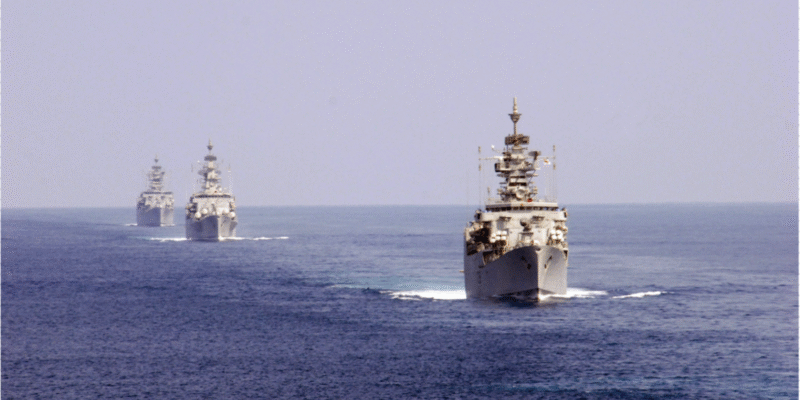
Khamenei’s statements are the most explicit warnings he’s issued as the aircraft carrier USS Abraham Lincoln navigates through the Arabian Sea alongside other American warships under President Trump’s orders, which were a response to the violent crackdown on nationwide protests.
Despite both parties signaling that they are ready to resume talks, it is still unclear whether President Trump has made his “final decision” on using force against Iran or not.
President Trump has repeatedly threatened the use of force in response to both the nation’s failure to reach a nuclear deal agreement with the US, as well as the killing of protestors throughout the crackdown.
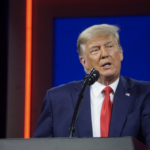
“Hopefully, we’ll make a deal. If we do make a deal, that’s good. If we don’t make a deal, we’ll see what happens,” President Trump said.
The Iranian government has detained tens of thousands of individuals since the start of the protests, with Khamenei fortifying the regime’s stance on the matter by labeling the demonstrations as “a coup.”
In Iran, treason charges can lead to the death penalty as punishment, sparking concerns about Iran performing mass executions for those in custody.
At the same time, Tehran scheduled a live-fire military exercise for February 1 and 2 in the Strait of Hormuz, the strategic waterway between the Gulf of Oman and the Persian Gulf, where a fifth of all oil passes. The U.S. Central Command warned Iran not to obstruct commercial traffic or threaten American ships or aircraft during the drill.