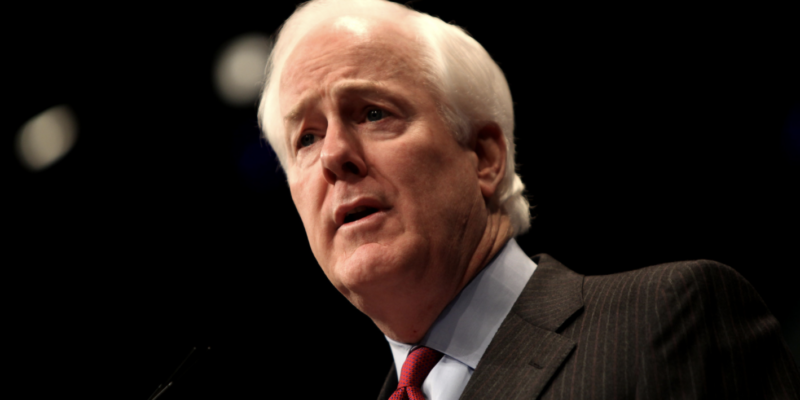

U.S. Senator John Cornyn (R) has introduced the Need for Speed Act, legislation that would require the U.S. Department of Transportation's Federal Highway Administration to develop a national infrastructure intelligence tool aimed at identifying traffic bottlenecks, easing congestion, and improving emergency response times on highways.
"Incidents like the collapse of the Francis Scott Key Bridge have exposed critical vulnerabilities in our nation's highway infrastructure, hampering the swift deployment of emergency responders and disrupting millions of dollars in trade and travel," said Cornyn. "This legislation would empower the Department of Transportation to develop a national intelligence tool that will boost interstate coordination, ease congestion, and improve roadway safety."
According to Cornyn's office, the U.S. Department of Transportation currently lacks a unified resource to assess transportation system performance and identify congestion points. Existing datasets are described as fragmented and often inaccessible to the public sector, limiting data-driven investment decisions and coordinated responses during emergencies.
After the Francis Scott Bridge failure, the state of Maryland reportedly lacked sufficient data to redirect commodity traffic across state lines, exposing broader weaknesses in interstate coordination and roadway response efforts.
lawmakers argue that siloed data systems can result in delayed decisions and reduced visibility during a crisis, slower emergency response times, and greater risks to driver safety.
Under the proposed legislation, the intelligence tool would integrate highway performance monitoring systems, commodity flow data, truck parking demand metrics, urban congestion reporting, and other relevant datasets into a single actionable platform.
The system would enable federal, state, and local officials to better coordinate investments, respond rapidly to emergencies, and strengthen infrastructure resiliency.
Cornyn's proposal frames the tool as a step toward improving national security, economic competitiveness, and roadway safety through enhanced data transparency and interstate collaboration. If enacted, the Need for Speed Act would mark a significant federal effort to modernize transportation data infrastructure and streamline emergency response planning nationwide.