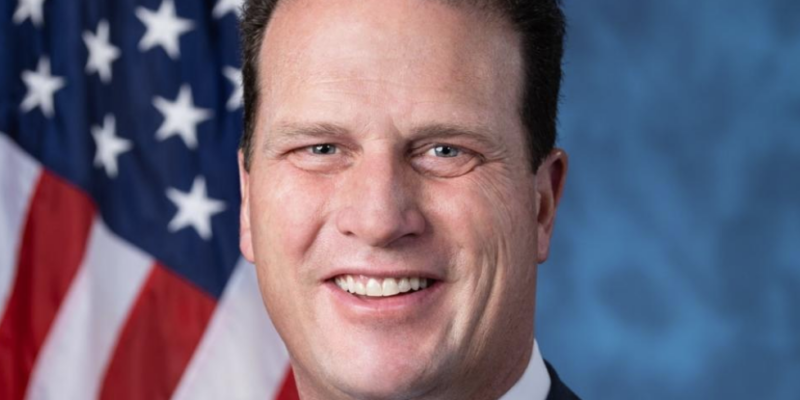

Congressman August Pfluger (R) announced bipartisan support for legislation that would strengthen federal penalties for doxxing, threatening, and intimidating federal law enforcement officers following a House Homeland Security Committee hearing with DHS Secretary Markwayne Mullin.
What Happened?
Rep. August Pfluger, Chairman of the House Homeland Security Subcommittee on Counterterrorism and Intelligence, used a recent House Homeland Security Committee hearing to push for stronger legal protections for federal law enforcement officers.
During an exchange with Department of Homeland Security Secretary Markwayne Mullin, Pfluger highlighted recent threats directed at federal agents and called for tougher federal penalties against individuals who dox, threaten, or intimidate law enforcement personnel.
Pfluger also sought support from colleagues on both sides of the aisle, receiving public commitments from Representatives Dan Goldman (D-NY) and Lou Correa (D-CA) to work on legislation addressing the issue.
Why is Pfluger proposing the legislation?
Pfluger pointed to recent threats against federal agents, including an incident in which an individual allegedly threatened an officer and the officer's family.
According to Pfluger, federal agents have expressed concerns about increasing threats and harassment directed at law enforcement personnel, particularly through online doxxing and intimidation campaigns.
What lawmakers and officials are saying
Rep. August Pfluger: "Your agents recommended that we work on enhancing the penalties for doxing, for intimidating, for threatening federal agents, including Customs and Border Protection agents. That's exactly what I'm going to do."
DHS Secretary Markwayne Mullin: "If they dox them or they threaten them in any way whatsoever, it should be a very stiff penalty to get all their attention."
The Bottom Line
Pfluger says he plans to advance bipartisan legislation to increase penalties for individuals who dox, threaten, or intimidate federal law enforcement officers, while continuing broader discussions on homeland security, counterterrorism, and cybersecurity.