
The war between the United States and Iran has entered a new phase, as lawmakers weigh whether America’s allies are doing enough to support the military campaign and whether renewed diplomatic efforts can bring an end to the conflict.
The war in Iran has raged on for several months now, with periods of alleged peace deals and ceasefires quickly terminated by strikes from one country to the other. The latest escalation came last week when four servicemembers were killed by Iran’s military, marking the first U.S. deaths since the June ceasefire agreement.
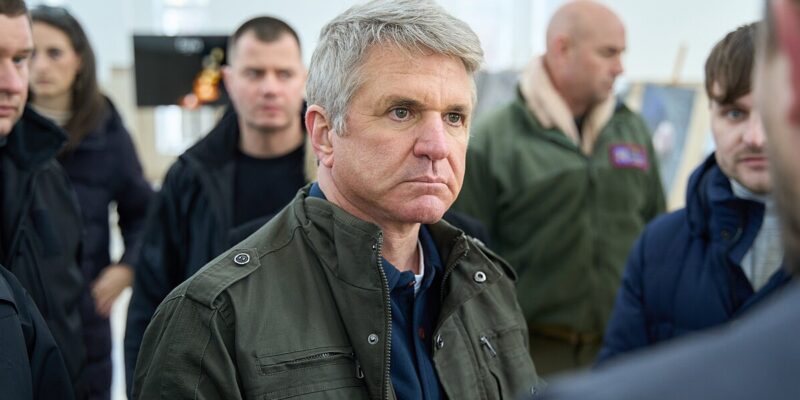
Representative Michael McCaul (R-TX) said Iran’s “dark veil of terror” has been looming over the Middle East well before its war with the U.S., calling the military escalation between the foreign power and the United States “unavoidable.”
“I commend this president for being the first president to take on this regime and Iran on its path to a nuclear bomb,” Rep. McCaul said. “Negotiating in the past hasn't worked.”
Rep. McCaul said he is especially concerned about the efforts by the U.S. to block the Strait of Hormuz from Iran, which returned a few weeks ago after Iran struck several U.S. bases in Bahrain and Kuwait.
“We are doing this to the benefit of our European allies,” Rep. McCaul said, adding that the U.S. does not “need” the strait.
U.S. Ambassador to the United Nations (U.N) Mike Waltz reassured Rep. McCaul that the U.N Security Council is also doing its part to aid the U.S. in the conflict. He said, because of Iran’s most recent military efforts against the U.S., “nobody” wants to buy oil.
“We've had Iran absolutely diplomatically isolated,” Waltz said. “We may not pay a lot of attention to what happens in the UN Security Council here in our media, but I can tell you, around the rest of the world, they are glued to every word.”
These concerns come alongside President Donald Trump’s insistence that the U.N. continues to fail to come to the U.S.’s defense in its war with Iran.
Waltz said the U.N. Security Council is the “only forum” Iran has to engage in global negotiations, and 140 countries have used that stage to condemn Iran’s military actions.
“Keeping them diplomatically isolated is my job,” Waltz said.
But Rep. McCaul said he is still not optimistic about where negotiations between Iran and the U.S. are now. To be successful, these peace talks will require more than just diplomatic conversation, he said.
“It is my sincere hope…that the president unleashes our Department of War on Iran,” he said. “As long as this regime's in power, we're going to continue to have this problem.”