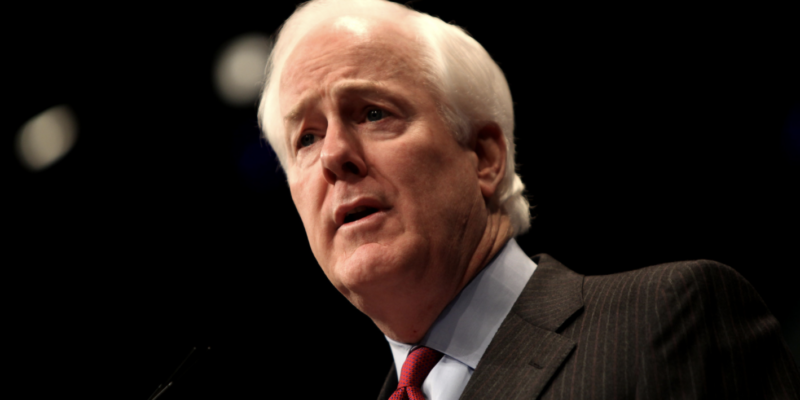

Senator John Cornyn (R) is usually a prominent voice in Washington when it comes to securing the southern border. But now, the Texas Republican is asking the Trump administration to slow down on one particular border security project, and he says Texans themselves want a say before it goes any further.
Sen. Cornyn sent a letter to Department of Homeland Security Secretary Markwayne Mullin urging the agency to meet with Texas border sheriffs, county judges, landowners, and Big Bend advocates before continuing construction of physical border barriers in Big Bend National Park and Big Bend Ranch State Park.
"Texas has always worked cooperatively with the Department of Homeland Security on border security, and we fully support strong border security measures to stop the flow of illegal aliens, drugs, and potential terrorists into the United States," wrote Sen. Cornyn.
The problem, according to local stakeholders, is where the barriers are being built.
Big Bend is already one of the most rugged stretches of the Texas-Mexico border, featuring steep mountains, deep canyons, deserts, and riverbank cliffs reaching roughly 1,000 feet. Local officials argue that the terrain itself creates a natural barrier that makes large-scale crossings difficult.
Cornyn said the residents are concerned that physical barriers, along with lighting systems, access roads, and maintenance corridors, could damage the parks' landscape, disrupt wildlife migration, threaten culturally significant Native American sites, and restrict access to the Rio Grande.
There is also a financial concern surrounding tourism. Big Bend's scenery and wilderness attract visitors from across the country, making tourism a major economic driver for surrounding communities. Local leaders fear that a massive border infrastructure project could change the character of the region and hurt the businesses that depend on visitors.
He is asking Mullin or his representatives to meet directly with local stakeholders or his representatives to meet directly with stakeholders and address their concerns before any additional construction moves forward.