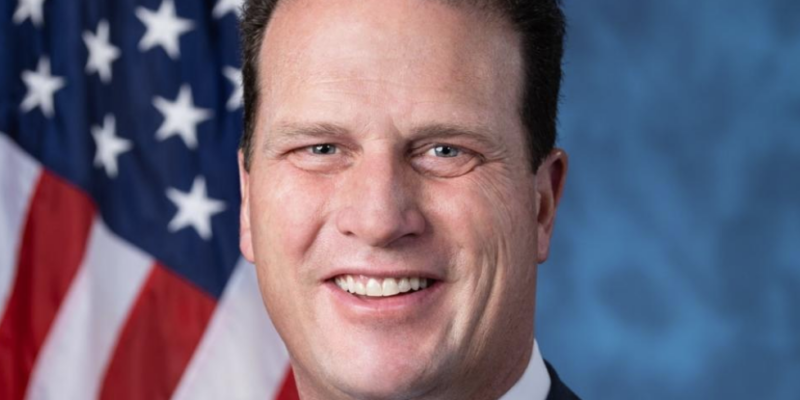

Representatives August Pfluger (R) and Chrissy Houlahan (D-PA) introduced bipartisan legislation aimed at strengthening safeguards around DNA synthesis technology while supporting continued biotechnology research and development.
What would the legislation do?
Reps. Pfluger and Houlahan introduced the Biosecurity Modernization and Innovation Act, legislation designed to strengthen security requirements for synthetic DNA and other nucleic acid synthesis technology.
The bill would require covered entities to verify the identity of buyers and establish protocols for screening nucleic acid sequences, including sequences generated by benchtop synthesis equipment.
Why are lawmakers seeking new safeguards?
Gene synthesis is used in areas including medicine, agriculture and manufacturing, but the technology can also present biosecurity risks if genetic material is misused.
Pfluger said current safeguards have not kept pace with advances in biotechnology, particularly as DNA synthesis becomes more accessible through newer technologies.
Rep. August Pfluger: "Biotechnology is one of America's greatest strategic advances. Right now, there is a dangerous gap between how fast this technology is moving and the safeguards we have in place to keep it out of the wrong hands."
Houlahan said the legislation would give the federal government greater flexibility to respond to emerging technologies and threats while preserving biotechnology innovation.
How does the bill fit into broader legislation?
The House legislation, H.R. 10197, was introduced August 31 and referred to the House Energy and Commerce Committee. It is the House companion to bipartisan Senate legislation introduced by Sens. Tom Cotton (R-AR) and Amy Klobuchar (D-MN) in January.
The Senate bill would establish federal requirements for gene-synthesis providers to screen orders and customers for potentially dangerous sequences and would create a biotechnology governance sandbox at the National Institute of Standards and Technology.