
Lawmakers are evaluating the Department of Energy’s (DOE) proposal to create Nuclear Lifecycle Innovation Campuses that would modernize the nation’s full nuclear fuel cycle – but not without some public health concerns.
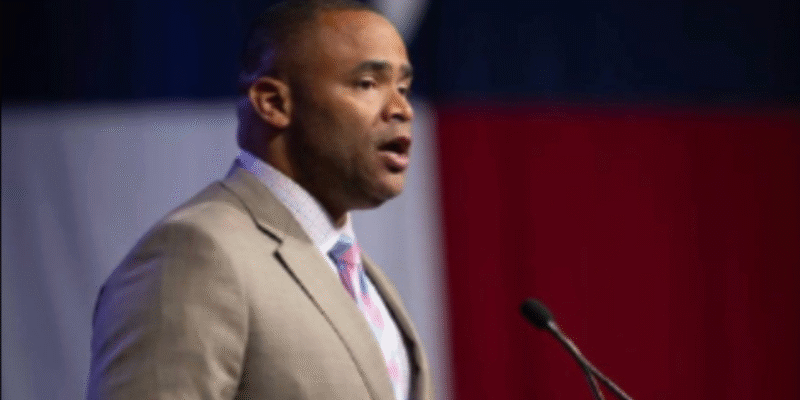
During a House Energy and Commerce Committee hearing last week, Representative Marc Veasey (D-TX) said that although these campuses, which are voluntary federal-state partnerships, indicate the DOE wants to “build that path forward” toward nuclear innovation, Congress must ensure that the policy is technology-neutral and protects public health.
“It needs to first establish a generic, technology-neutral public health standard against which potential designs and geologies can be evaluated,” Rep. Veasey said.
Rep. Veasey said there are still many concerns surrounding this proposal. He pointed to the nuclear spin fuel policy as an example, adding that it is one of the “central unresolved questions” preventing the U.S. from expanding its nuclear power.
The proposed campuses would bring together multiple stages of the nuclear fuel cycle, including fuel fabrication, enrichment, reprocessing and waste disposition. Depending on the host state, the sites could also support advanced reactor deployment, power generation, manufacturing and data centers.
But Theodore Garrish, assistant secretary for Nuclear Energy in the DOE, said the Nuclear Regulatory Commission (NRC) must balance regulatory oversight with the need to support innovation in the nuclear industry for these campuses to be successful.
“In other words, we are the applicant, and we must prove our case, and they must provide adequate assurance of public safety in the process of approving our ability to move forward,” Garrish said.
Rep. Veasey also raised concerns on whether the proposed Nuclear Waste Policy Act provides enough flexibility for modern fuel systems, including adequate provisions for new nuclear technologies.
“We need clarification, and we need a provision so that we don't have exclusivity only for vehicles,” Garrish said. “But we need to work on that on that bill eventually to change several aspects of it to make it work for the new program.”