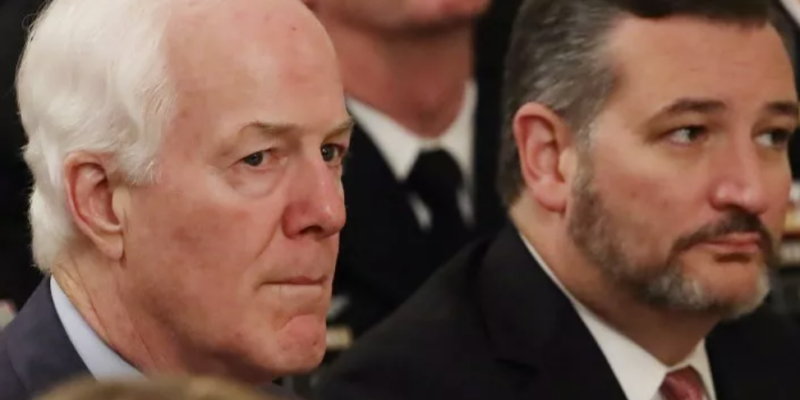

U.S. Senators Ted Cruz (R) and John Cornyn (R) have introduced the Army Organic Industrial Base Mineral Partnerships Act of 2026, legislation designed to expand domestic critical mineral production by allowing the U.S. Army to partner with private companies to extract lithium and other minerals from Army facilities.
The Bill specifically authorizes partnerships for lithium brine drilling at the Red River Army Depot in Texarkana and other Army Organic Industrial Base (OIB) sites nationwide.
Lawmakers say the measure is intended to strengthen the United States' supply chain for critical minerals while reducing reliance on foreign competitors.
"Red River Army Depot sits atop the Smackover Formation, which is one of the largest lithium brine reserves in the United States," said Sen. Cruz. "The reserves are a critical strategic asset, and enable the production of drones, communication systems, and other systems necessary for America's national security."
Sen. Cornyn emphasized concerns about foreign control of mineral supplies, particularly from China.
"China controls the lion's share of the global supply of critical minerals, posing a serious and imminent threat to our national security," said Cornyn. "By empowering Army Depots to partner with private entities to extract critical minerals and allowing them to reinvest profits toward mission success, this legislation would reduce dependence on foreign adversaries."
Companion legislation was introduced in the House by Nathaniel Moran (R), who said the bill would help secure America's economic and national security interests through expanded domestic mineral production.
The United States currently relies heavily on imported critical minerals due to limited domestic mining and processing capacity. Supporters argue the legislation would help transform Army industrial sites into mineral production hubs while strengthening military readiness and advanced manufacturing.
The Army Organic Industrial Base Mineral Partnerships Act of 2026 reflects growing bipartisan concern over America's dependence on foreign critical minerals and highlights Texas' potential role in expanding domestic lithium production.