
The Southern Poverty Law Center (SPLC) faced sharp questioning from members of the House of Representatives about its standards for designating hate groups, while also defending itself against federal fraud allegations.
According to the Department of Justice, a federal grand jury in Alabama indicted the nonprofit organization in April for alleged wire fraud, false statements to a bank and money laundering conspiracy. The organization has denied the allegations.
Representative Jamie Raskin (D-MD) questioned this lack of evidence during a House Judiciary Committee hearing earlier this week. He said Congress has yet to see any donor complaints of fraud or evidence of any of these allegations.
“Trump’s Department of Justice has offered no evidence that anyone was actually deceived or defrauded by this perfectly lawful, well-known and accepted practice that the FBI approved for many years,” Rep. Raskin said.
Under former President Joe Biden, the FBI relied on the SPLC on several occasions to identify and monitor domestic hate and extremist groups.
How Does the SPLC Define a Hate Group?
According to SPLC CEO Bryan Fair, it labels groups based on statements and activities that the organization has determined to “demean and vilify” certain groups.
“We target groups and label groups because of what they say about others, and we have a constitutional right to do that, and we will continue to do that,” Fair told committee members.
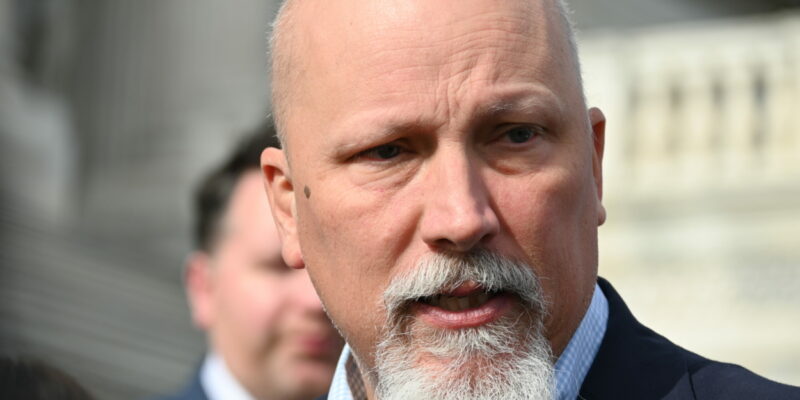
But Rep. Chip Roy (R-TX) raised concerns about the SPLC’s evaluation process. He said the SPLC has no Islamic-oriented groups on its hate map.
“We don't target any group because of its religion,” Fair said.
Rep. Roy said SPLC took nearly three weeks to issue a statement condemning the Oct. 7, 2023, Hamas attacks on Israel, while it responded to other incidents of hate or violent extremism much faster.
“The SPLC has a 55-year history of fighting antisemitism,” Fair said. “It speaks for itself.”
Fair emphasized that the SPLC uses a certain criterion to evaluate the speech of other individuals and groups.
“One designation is when a group expresses, vilifies or demonizes individuals based on immutable characteristics,” Fair said. “The second is a group that expresses anti-government conspiracy theories.”
Rep. Roy himself said he is on the SPLC’s “hate list” for his work to combat followers of Sharia law from igniting violence in Texas.
“Work we did in this very room, and in this subcommittee on the Constitution, highlighting concerns of Sharia law were included in the hate watch,” Rep. Roy said.
Rep. Lance Gooden (R-TX) said the SPLC’s evaluation process is “disgusting,” labeling mainstream conservative groups like the Family Research Council and Turning Point USA as hateful, but not “domestic terrorist” Antifa or pro-abortion extremist group Jane’s Revenge.
“I'd actually ask for you to add me to your hate map,” Rep. Gooden said. “I'd be honored to be on it. It sounds like it'd be in great company.”
Defending its Designations
Fair said the Family Research Council was labeled as “hateful” for its anti-LGBTQ+ stance, and TPUSA for remarks made by former leader Charlie Kirk that “vilified” others per the SPLC’s criteria.
At the hearing, Crockett defended the SPLC's characterization of Turning Point USA by citing several controversial statements from Charlie Kirk and said she could understand "where SPLC was going" with its assessment.
Rep. Jasmine Crockett (D-TX) defended Fair’s characterization of TPUSA and Kirk, citing several of his public comments as evidence, including, “We made a huge mistake when we passed the Civil Rights Act in the mid 1960s,” and others.
“Y'all don't seem like y'all even understand what a hate organization is,” Rep. Crockett said.