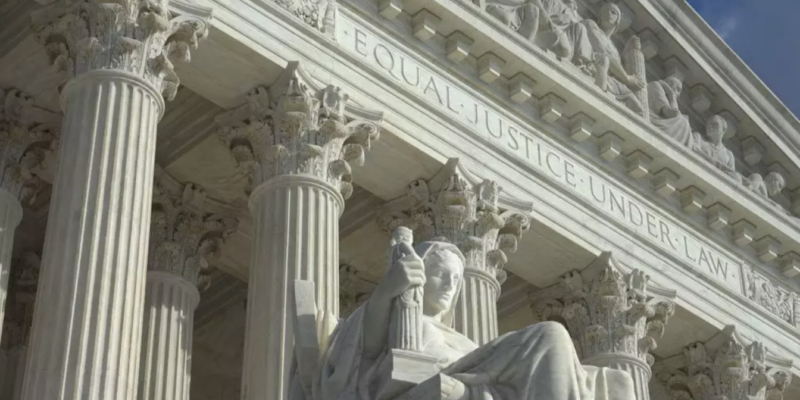

The Supreme Court ruled in a 6-3 vote Thursday in Mullin v. Doe the Trump administration can end Temporary Protected Status (TPS) for Syria and Haiti, diminishing the race-discrimination claim by challengers.
What is Temporary Protected Status?
Congress created TPS in 1990 as a temporary immigration status given to those coming from countries deemed unsafe to return to, due to ongoing armed conflict, environmental disaster, or extraordinary and temporary conditions. Those who are in the U.S. at the time the government designates a country TPS are granted protection from deportation and receive a work permit.
What are people saying?
- Opinion of the Court: "None of the cited statements by either the President or the Secretary was overtly racial, and in substance all expressed policy views that could rest on race-neutral justifications."
- CEO of Global Refuge: "Our immediate concern is what happens to these families and children should they be forced back to the dire circumstances that have long prevented their safe return."
Currently, there are 17 countries with TPS designations. Syria has had TPS since 2012 for "extraordinary and temporary conditions" related to a repressive regime at the time. Haiti received a TPS designation in 2010 after a devastating earthquake.
In November 2025, the Secretary of Homeland Security provided public notice that both countries' TPS designations would terminate.
"Our immediate concern is what happens to these families and children should they be forced back to the dire circumstances that have long prevented their safe return," Krish O’Mara Vignarajah, President and CEO of Global Refuge, said.
Seven Syrian nationals sued in the Southern District of New York asserting claims under the Administrative Procedure Act (APA). The District Courts decided they were entitled interim relief and the Second Court denied request for stay.
Additionally, five Haitian nationals sued in the District Court for the District of Columbia asserting claims under the APA and asserting the removal of the TPS designation violated the constitutional right to equal protection, claiming it was motivated by race.
"None of the cited statements by either the President or the Secretary was overtly racial, and in substance all expressed policy views that could rest on race-neutral justifications," the opinion of the Court wrote.
The District Court also granted interim relief and a D.C. Circuit panel denied request for stay in the Haiti case.
The court ultimately ruled respondents are "unlikely to prove that race was a motivating factor" in the decision and are not entitled to interim relief on the equal protection claim.