
With the Department of Justice’s fraud takedown efforts ramping up over the past few months, members of Congress continue to target waste, fraud, and abuse in federal assistance programs like the Supplemental Nutrition Assistance Program (SNAP).
The program is meant to provide monthly food assistance to low-income individuals and families. The United States Department of Agriculture (USDA) asks states to report the number of people on SNAP benefits. Based on this data, an annual average of $3 billion was found in potential waste, fraud and abuse, and at least 186 deceased individuals’ identities were being used to claim these benefits.
Under the Trump administration, several changes have been issued to SNAP and USDA guidance in an attempt to reduce SNAP fraud. As a result, $186 billion has been cut from the program, and 4.7 million people have lost the benefits in the last 10 years.
Who Should Qualify?
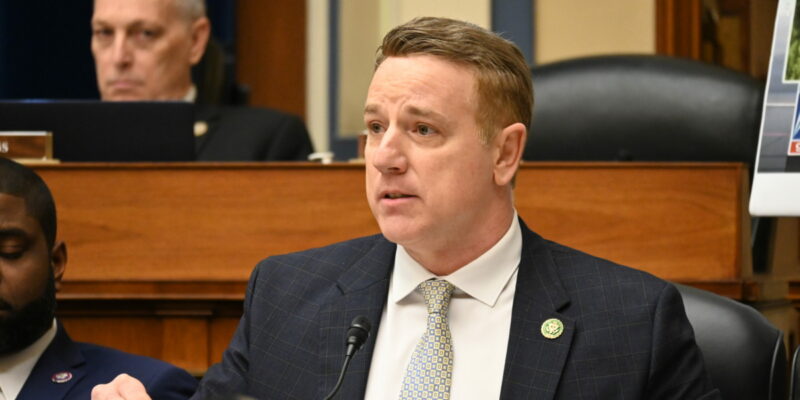
Representative Pat Fallon (R-TX) said he found the number of able-bodied people claiming SNAP benefits to be most alarming.
“It's shocking that 21% of the people on SNAP are not elderly, but are able-bodied and able-minded,” Rep. Fallon said. “It costs the American taxpayers $18 billion, and there are 8.8 million of those folks.”
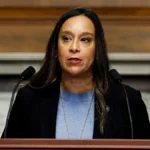
Since 2019, the USDA has found a 68% increase in those on SNAP. Gina Plata-Nino, director of SNAP Policy and Advocacy at the Food Research and Action Center, said she thinks this is a result of the economic hardships presented by the pandemic in 2020.
“The pandemic has long since been over; it’s been several years at this point,” Rep. Fallon said. “When you're hungry, you go out and find a job, and not just have to rely on someone else to do it again.”
Although the USDA asked all states to report information on its SNAP program, 22 did not.
“Every single one of them has a Democratic governor,” Rep. Fallon said. “All of them.”
Although Rep. Fallon suggested this could be due to these states being “terribly mismanaged” or its leadership “abusing the system,” Plata-Nino had a different perspective.
“They are ensuring that individuals who need access to benefits to be able to make and meet their basic needs have those resources,” Plata-Nino said.
Rising Rolls, Rising Questions
Regardless of the motivations behind these states’ actions, Rep. Michael Cloud said something must be done to decrease the number of people on SNAP.
“It's important that we make sure that it's going to do exactly what it was supposed to do,” Rep. Cloud said. “SNAP has almost doubled in the last five years. Meanwhile, the poverty rate in our country is roughly where it was about five years ago.”
Based on the information reported by some states, there are 356 to 500,000 recipients registered in multiple states for SNAP, Rep. Cloud said.
“Having access to the National Accuracy Clearinghouse, which is a nationwide database that would provide information to states to prevent or identify dual enrollment, would be critical,” said Dawn Royal, the director of the United Council on Welfare Fraud, on how to ensure these benefits go toward those who need it.
Royal also said ID verification is another important precaution that must be implemented, as it ensures there are no duplicate enrollments and that no one is registering on behalf of a deceased identity.
“We can make sure again that the benefits are issued accurately,” Royal said.
Senior Research Fellow at Advancing American Freedom Rachel Greszler said new 1099 reporting forms, which would provide more information on recipients’ income and payments, would also help eradicate “eligibility loopholes.”
“We should be able to have every benefit that goes out the door, a beginning to an end accounting of that,” Greszler said.
Ultimately, Rep. Fallon said combatting SNAP fraud should not be a partisan issue, as both parties are working toward the same end goal.
“In a perfect world, there would literally be no one on SNAP,” Rep. Fallon said. “That's what we're all working toward.”