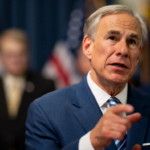

Congressman Christian Menefee (D) questioned a Trump administration science official during a House hearing over President Donald Trump's claims about the CHIPS and Science Act and raised concerns about the growing impact of AI data centers on Texas water supplies and electricity costs.
Menefee challenges CHIPS Act claims
During a House Science, Space, and Technology Committee hearing on the administration's Fiscal Year 2027 research priorities, Rep. Menefee challenged Trump's repeated claim that companies could only receive CHIPS funding if they were "run by transgender people," stating that no such requirement exists in the law or in funding agreements.
The witness responded that he was "not familiar" with Trump's comments.
Concerns over AI data centers in Texas
Menefee also focused on the rapid growth of artificial intelligence infrastructure and its impact on Texas communities.
He cited research estimating that Texas data centers could consume nearly 399 billion gallons of water annually by 2030 while electricity demand continues to increase.
The congressman said the expansion of AI infrastructure raises concerns about water resources and higher utility costs for Texas families.
Questions on state authority
Menefee asked whether the administration would commit to preserving states' authority to regulate water usage and protect residents from rising electricity costs as federal AI policies continue to develop.
When asked whether the administration would support and strengthen state laws governing data center water use and electricity impacts, the administration official declined to make that commitment.
The witness replied: "I think I'm going to stick with my domain, which is science and technology."
The official referred broader regulatory questions about AI data centers to other federal agencies.
The Bottom Line
Congressman Christian Menefee used a House committee hearing to question a Trump administration official about President Trump's statements regarding the CHIPS and Science Act while also pressing for answers on how the administration plans to address the increasing water and energy demands created by AI data centers in Texas.