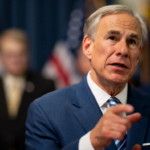

Congressman Keith Self (R) has introduced the Super Pay-As-You-Go Act, legislation that would require Congress to offset new spending with at least twice the amount in savings while limiting budget loopholes and strengthening enforcement of federal fiscal rules.
Self proposes tougher budget requirements.
Rep. Self introduced the Super Pay-As-You-Go (SUPER PAYGO) Act, legislation designed to strengthen the federal government's budget enforcement rules by requiring greater spending offsets and restricting the use of budget waivers.
The proposal would build upon the Statutory PAYGO Act of 2010, which currently requires new mandatory spending or tax reductions to be offset dollar-for-dollar so they do not increase the federal deficit.
According to Self, lawmakers have frequently bypassed those requirements through emergency designations and legislative waivers.
2-for-1 spending offset requirement
The centerpiece of the legislation is a new "2-for-1" Super PAYGO rule.
Under the proposal, any legislation that increases direct spending or reduces federal revenue would have to generate savings equal to at least twice its total budgetary cost over both five-year and ten-year budget windows.
For example:
- A bill costing $100 billion would require at least $200 billion in spending reductions or other offsets.
- Legislation failing ot meet that standard would face procedural hurdles before advancing in Congress.
Rep. Keith Self: "Washington has spent decades spending money it doesn't have. The result is a national debt approaching $40 trillion and a burden that will fall on Americans' children and grandchildren."
Closing budget loopholes
The bill also seeks to tighten several existing budget practices.
Among its provisions, the legislation would:
- Limit emergency spending designations to situations that are sudden, temporary, necessary, and related to public safety, national security, or significant property damage.
- Require emergency designations to expire after 24 months.
- Prevent Congress from including PAYGO waivers inside omnibus spending bills or continuing resolutions.
- Require waivers to be considered as standalone legislation.
The legislation would also require the Office of Management and Budget to implement automatic across-the-board spending cuts, known as sequestration, to eliminate the shortfall if Congress ends a session with a remaining Super PAYGO deficit.
The Bottom Line
Congressman Keith Self's Super PAYGO Act would significantly tighten federal budget rules by requiring Congress to offset new spending with twice the amount in savings, limiting emergency spending exemptions, strengthening waiver requirements, and increasing transparency surrounding federal deficits.