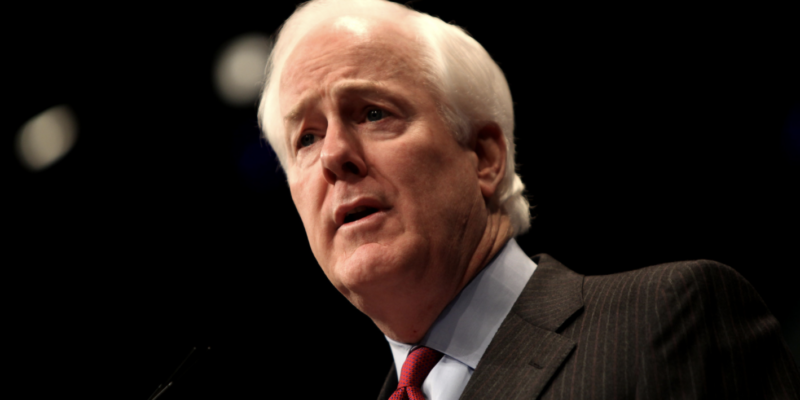

U.S. Senator John Cornyn (R) signaled support for a potential third budget reconciliation package this year, outlining Republican priorities that include permanently defunding Planned Parenthood and expanding federal immigration enforcement funding.
Speaking on the Senate Floor, Cornyn emphasized that the current budget resolution is focused on funding the U.S. Customs and Border Protection (CBP) and Immigration and Customs Enforcement (ICE), aligning with broader Republican efforts to strengthen border security. He criticized Democratic opposition to the measure, arguing that resistance to Department of Homeland Security funding undermines national security priorities.
"It's incredible to me...that our Democratic colleagues would simply reflexively oppose funding for the Department of Homeland Security," said Cornyn, adding that the legislation is being kept "focused like a laser" on immigration enforcement ahead of a June 1 deadline backed by President Donald Trump and Senate leadership.
Looking ahead, Cornyn indicated that once the current reconciliation bill is completed, Republicans may pursue a third package to advance additional policy goals. Chief among them, he said, is ending federal funding for Planned Parenthood.
"One of those priorities for me is to permanently defund Planned Parenthood," stated Cornyn. "Planned Parenthood... should not receive a dime – a dime of taxpayer funding."
Cornyn pointed to a previous Republican-backed measure that temporarily restricted Medicaid funding for abortion providers, noting that the provision is set to expire. He argued that a new reconciliation bill would allow Congress to make such restrictions permanent.
In his remarks, Cornyn also criticized Planned Parenthood's role in providing abortion services and raised concerns about its involvement in gender-related medical treatments, framing the issue as part of a broader "pro-life and pro-commonsense" agenda.
Cornyn's push for a third reconciliation bill highlights ongoing Republican efforts to pair immigration enforcement funding with broader social policy goals, setting the stage for continued legislative battles over federal spending and healthcare policy.