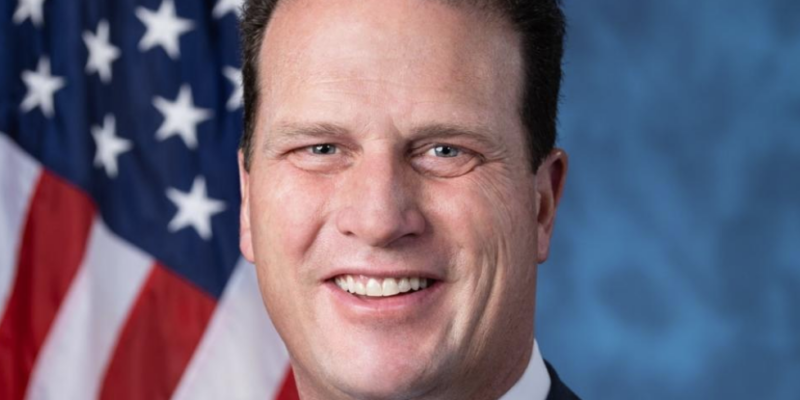

U.S. Representative August Pfluger (R) sharply questioned Environmental Protection Agency (EPA) Administrator Lee Zeldin during a House Environment Subcommittee hearing focusing on regulatory policy, energy costs, and the implications of a recent Supreme Court ruling.
During the exchange, Pfluger emphasized the significance of the Loper Bright Enterprises v. Raimondo decision, which limits the authority of federal agencies to broadly interpret statutes. He criticized fellow lawmakers for lacking awareness of the ruling, calling it "crucial" to understand modern federal rulemaking.
"It's shameful that some of our colleagues have no idea what Loper Bright actually is and what it does," said Pfluger, arguing the decision was a response to what he described as regulatory overreach.
Pfluger framed his broader argument around energy affordability, asserting that excessive regulation has harmed American households.
"What kills Americans is unaffordable energy in an unreliable electric grid," he said, adding that millions of households have struggled to cover basic expenses due to high energy costs.
In response, Zeldin defended the agency's shift in approach, noting that past reliance on the Chevron Doctrine allowed agencies to interpret statutes more flexibly.
"The Supreme Court weighed in... and said you can't do that anymore," Zeldin explained, emphasizing a commitment to following "the best reading of the law."
The discussion also turned to methane regulations, specifically the OOOOb and OOOOc rules. Pfluger argued these policies imposed high costs and failed to account for industry progress, citing a 70% reduction in methane emission intensity in the Permian Basin alongside a 320% increase in oil and gas production.
Zeldin confirmed the EPA is revisiting those rules through a multi-phase process, including updated guidance and potential revision.
"We want more reliable base load power. We want to unleash energy dominance," he said.
Pfluger also raised concerns about the HFC Management Rule, particularly its impact on industries like grocery refrigeration and semiconductor manufacturing. Zeldin indicated that the agency is working on adjustments, with a proposal already submitted for review.
Throughout the hearing, Pfluger positioned the EPA's current direction as a corrective shift toward balancing environmental protection with economic growth. He also pressed Zeldin to clarify how the agency is implementing the Clean Air Act "as written" without expanding its scope beyond congressional intent.
The exchange reflects a broader national debate over the scope of federal regulatory power, especially in the wake of the Loper Bright decision. As policymakers continue to navigate energy policy, environmental standards, and economic pressures, hearings like this signal ongoing tensions over how far federal agencies should go, and who ultimately sets those limits.