
The House of Representatives voted 216-204 against a bill to build the Smithsonian American Women’s History Museum on the National Mall in Washington, D.C., after debates erupted over who the museum could honor and the administration’s influence over it.
The Smithsonian American Women’s History Museum Act originally stated it would designate the South Monument site for the museum, dedicating it to preserving and honoring women’s historical and current achievements.
Ahead of the bill’s approval, Republicans led an amendment last month saying the museum could not portray “any biological male as a female,” and that President Donald Trump can change the site of the museum within the first 180 days of the bill's enactment.
The Democratic Women’s Caucus immediately pulled its support for the bill, calling this a “poison pill” amendment that destroys months of bipartisan efforts.
“A museum about women, fought for and supported by women, should not be controlled by one man,” said Reps. Teresa Leger Fernández (D-NM), Hillary Scholten (D-MI) and Emilia Sykes (D-OH) in a joint statement. “We strongly oppose this bill as amended.”
This decision comes just after the House passed the Stopping Indoctrination and Protecting Kids Act, which would deny schools federal funding for not disclosing a child’s gender identity to their parents. Texas Representatives were especially divided on the legislation, with some arguing it wrongfully “outs” transgender kids, putting them at risk of harm or abuse.
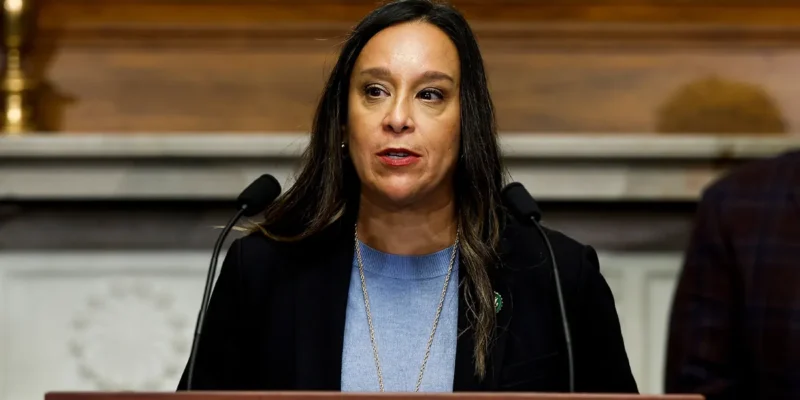
As an original co-sponsor of the bill, Rep. Monica De La Cruz (R-TX) said not supporting the measure bill is the real danger.
“It is absolutely unacceptable that any member would oppose this bill because they want a biological male, a man, to be honored in the space designed for women,” Rep. De La Cruz said on the House floor prior to the vote.
Rep. De La Cruz added that any vote to oppose this legislation “undermines” every woman and the extensive history of women fighting for equal rights. The difference between a man and a woman is “common sense,” she said.
“Which, obviously, my colleagues on the other side of the aisle do not have and lost along the way,” she said.