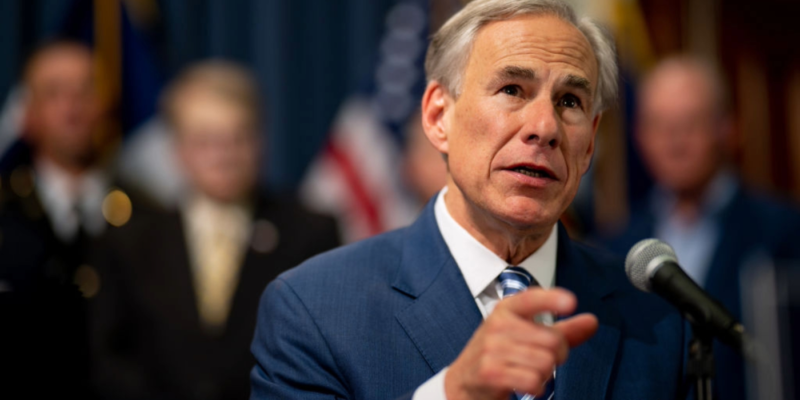

Governor Greg Abbott (R-TX) is warning that Houston could lose more than $110 million in state funding after the city approved a new policy limiting how local police coordinate with federal immigration agents.
The dispute centers on a city ordinance passed last week that changed how Houston Police Department officers handle requests from U.S. Immigration and Customs Enforcement (ICE).
The measure, backed by council members Alejandra Salinas (D-TX), Edward Pollard (D-TX), and Abbie Kamin (D-TX), says police officers cannot detain people longer or delay traffic stops for civil immigration warrants.
It also removed a rule requiring officers to wait up to 30 minutes for ICE agents to arrive.
In response, Gov. Abbott’s office sent a letter Monday to Houston Mayor John Whitmire (D-TX) threatening to end about $110 million in public safety grants, money that helps fund police, fire, homeland security, and emergency services across the city.
State's Additional Response
The governor gave Mayor Whitmire until April 20, 2026, to confirm the city will repeal the ordinance or risk losing the funds.
Whitmire, who had supported scaling back coordination with ICE, quickly called the situation a “crisis” for Houston. He warned that cutting state money could have “real consequences” for police and fire departments, emergency preparedness, and upcoming events such as the 2026 FIFA World Cup, which Houston is helping host.
Whitmire scheduled a special city council meeting for Friday to consider repealing the ordinance. He also said he had cautioned council members about “legal and financial risks” before the vote.
The measure passed narrowly, with 12 members in favor and 5 opposed.
Reports show Attorney General Ken Paxton (R-TX), like Abbott, strongly criticized the new rule and said last week he would “absolutely stop” it from taking effect.
Other Texas cities handle immigration cooperation differently. In San Antonio, officers are required to contact ICE about civil warrants, while Austin and Dallas give police more flexibility, allowing them to decide whether to call the agency but not requiring them to wait for a response.
Abbott’s move keeps the pressure on Houston and raises the stakes for city leaders as they decide whether to stand by the new policy or back away from it.