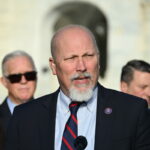

Congressman Keith Self (R-TX) has a warning for Americans: the government's push toward digital currency is the last step toward total surveillance, and he wants to stop it permanently.
Rep. Self has been one of the loudest voices in Congress against Central Bank Digital Currencies, or CBDCs. In simple terms, a CBDC would be a digital version of the dollar issued and controlled directly by the federal government, replacing or supplementing physical cash.
To understand why Self is so fired up, it helps to know what CBDCs actually are. Researchers have found that more than 130 countries are exploring them, drawn by promises of faster payments and greater financial access for people without bank accounts.
However, designing one comes with serious trade-offs; governments can't simultaneously guarantee privacy, financial stability, and regulatory oversight. Something always has to give.
Trade-off is Unacceptable
For Self, that trade-off is unacceptable. He believes giving the government a direct window into Americans' bank accounts would complete what he calls a surveillance state that's already well underway.
"We've got cameras everywhere," Self said. "But this allows the government transparent vision into your bank account, and control of it."
He pointed to a real-world example that stuck with many people. When Canadian truckers protested COVID mandates in 2022, the Canadian government froze their bank accounts. Self argues that a U.S. CBDC would give Washington the same power.
"Remember when the Canadian government froze truckers' bank accounts for protesting COVID mandates?" he wrote on X. "Imagine that power tied directly to your money. Not in America."
Self's Legislations
To back up his words with action, Self has pushed anti-CBDC language into two major pieces of legislation. He submitted an amendment to the FY26 National Defense Authorization Act that would ban the Federal Reserve from creating, developing, or even experimenting with a CBDC, under any name. He also included a prohibition on CBDCs in a letter to the House Appropriations Committee for FY2027.
His goal is simple: a total, permanent ban, not oversight, not regulation, not a pilot program. He wants to shut the door entirely before it opens.
Not everyone shares his alarm. Researchers studying CBDCs argue that privacy concerns, while real, can be managed through careful design, such as tiered privacy systems that grant greater anonymity to small everyday purchases while large or suspicious transactions face greater scrutiny.
Nevertheless, for Self, careful design isn't enough of a guarantee when the government is holding the keys.
"We need to do everything we can to ban permanently any central bank digital currency controlled by the federal government," he said.
Whether Congress acts on his proposals remains to be seen. Now, as more countries move closer to launching their own digital currencies, the debate over whether America should follow, and at what cost to privacy, is only going to get louder.