
The United States and Iran reached an official peace deal over the weekend, bringing an end to months of hostilities and reopening the Strait of Hormuz to restore reliable oil exports, though several key issues surrounding the broader conflict remain unresolved.
The agreement reportedly includes a 60 day ceasefire, a 60 day negotiating period on Iran’s nuclear program, the lifting of the U.S. blockade, an immediate end to fighting across all fronts and discussions on releasing frozen Iranian assets, as well as potential sanctions relief.
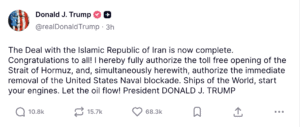
On Sunday, President Donald Trump announced on Truth Social that the deal was complete, and he was calling for the immediate removal of the U.S. blockade and opening of the strait. An hour later, he said the strait would reopen on June 19 once Vice President JD Vance signed the official deal after traveling to Switzerland.
Iran’s Supreme National Security Council confirmed in a statement that it had finalized the cease-fire deal with the U.S., adding that the agreement comes after “months of long and difficult negotiations” and that Pakistan and Qatar played a significant role in mediating the negotiations.
Shortly after Trump’s posts, Pakistani Prime Minister Shehbaz Sharif publicly supported the deal, thanking the U.S. and Iran for “their commitment to finding a diplomatic solution to the conflict” and the termination of military operations on all fronts, including Lebanon.
This long-awaited agreement has been threatened multiple times by Israel’s military attacks on Lebanon, and was once again threatened just before the peace deal was announced, when Israel issued airstrikes on Beirut.
"After the Israelis struck Beirut, we were very worried, and we saw a lot of evidence that the Iranians were going to launch a large number of missiles at the Israelis," Vice President Vance told Fox News.
Much of the deal still involves negotiations, especially with regard to Iran’s nuclear capabilities. This looming uncertainty leaves some members of Congress concerned.
“I am somewhat concerned that Iran’s view of the agreement seems different than what the American negotiating team is claiming,” Senator Lindsey Graham (R-SC) wrote on X, adding that under U.S. law, any nuclear deal with Iran will be reviewed and voted on by Congress.